How to Prepare Your Floor for Epoxy Coating in Austin Texas in 2026
If you wanna lay down an epoxy floor that lasts — in your garage, workshop, basement — you gotta start at the basics. That means prepping your concrete just right. Skip or rush steps, and your epoxy might peel, bubble, or look trash real quick. So grab some gear, roll up your sleeves, and let’s get going.
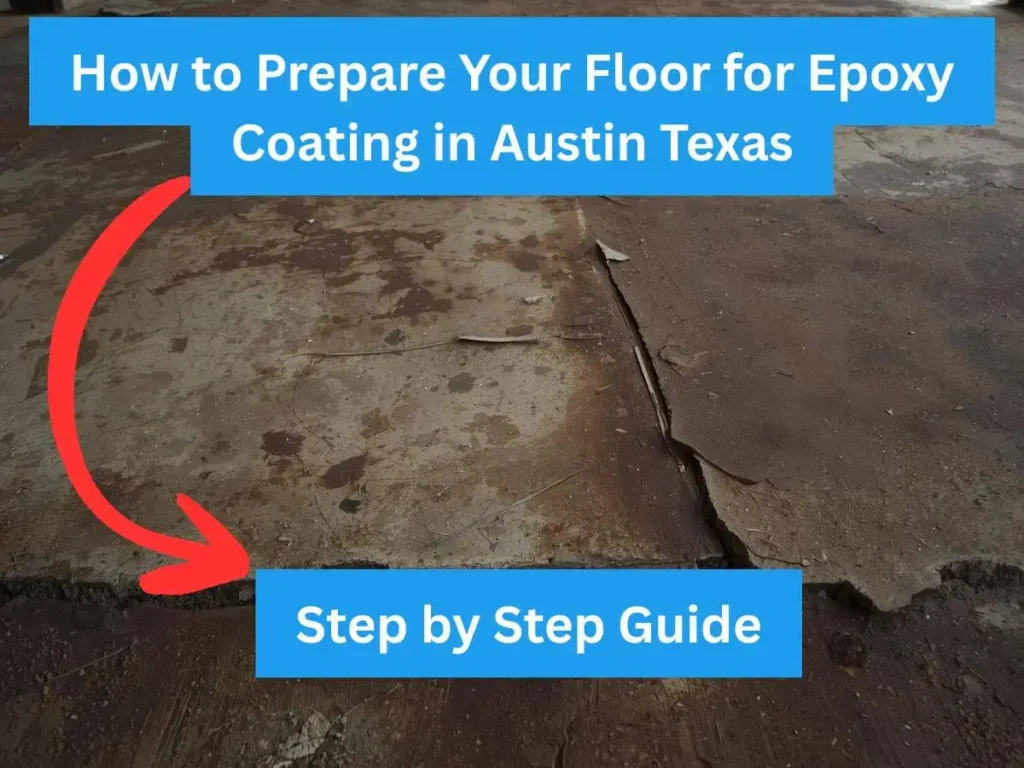
Tools & Materials You Need Before Starting
Essential Safety Gear
- Gloves, goggles or safety glasses, and a mask or respirator. Especially if you’re doing acid-etching or grinding — concrete dust and fumes are no joke.
- Old clothes (or work clothes) and boots if you plan to use acid. Concrete plus acid plus skin — not a good mix
Cleaning Supplies
- A stiff-bristle broom or push broom, a shop-vac or regular vacuum (good to have a wet/dry vacuum if you can).
- Degreaser or heavy-duty concrete cleaner (especially if floor had oil, grease, spills, or chemicals).
- Mop or scrub brush + bucket, water hose or pressure washer (optional but useful if surface is grimy).
Floor Preparation Tools
- Concrete grinder (diamond-cup wheel recommended) or other mechanical abrader / shot-blaster if available.
- Scraper, putty knife, or trowel for patching/filling cracks & holes.
- Plastic sheeting / tarps to protect walls, nearby surfaces, and to mask off drains, edges, etc.
Epoxy Supplies
- Epoxy kit (resin + hardener), mixing bucket, mixing stick or drill-mixer.
- Paint/epoxy rollers, trays, brushes for edges or corners.
- Primer (if your epoxy system recommends or requires it — especially for porous concrete or moisture-prone slabs).
Properly Cleaning and Repairing Your Floor
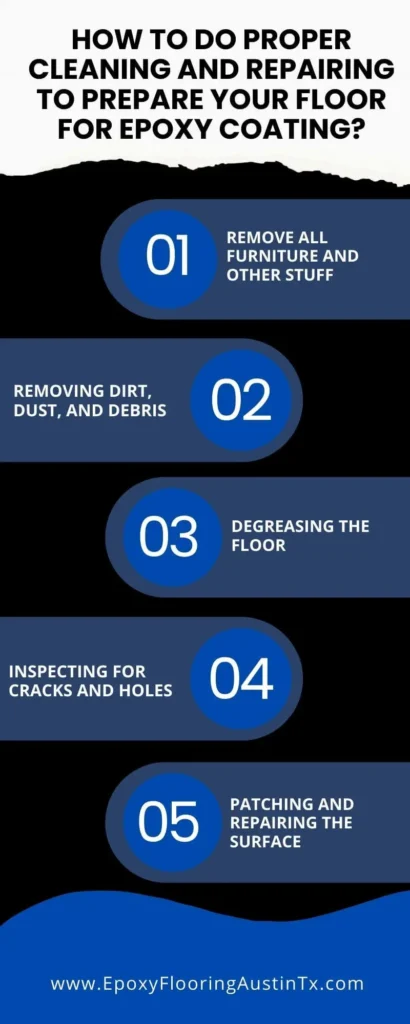
Remove all furniture and other stuff
First things first — clear it all out. Bikes, boxes, tools, old floor mats, cars — whatever’s on the slab must go. Don’t skip this. Also cover or mask walls, baseboards, doors, drains — everywhere epoxy or dust could splash or settle.
Removing Dirt, Dust, and Debris
Sweep the whole space totally with a broom. Utilize a vacuum to clean dust, small debris, and loose particles. Then mop or rinse if needed. The goal: clean, bare concrete surface.
Degreasing the Floor
If your garage or floor has ever seen oil, gasoline, grease, or chemical spills — you gotta degrease. Use a strong concrete cleaner or degreaser, scrub the spots, rinse, and repeat until stains fade. Oil or grease left behind will block epoxy adhesion.
Inspecting for Cracks and Holes
Now eyeball the floor closely. Look for cracks, chips, pits, holes, uneven spots, old spalls. These imperfections can mess up the smoothness of epoxy coating and create weak spots where epoxy might peel or crack under pressure.
Patching and Repairing the Surface
For any cracks or holes you find: use a concrete patch compound or epoxy-compatible filler. After filling, smooth it out so it’s flush with surrounding concrete. Once cured, you might need to lightly grind or sand the patch so it’s level. Don’t have big bumps or divots — epoxy over uneven stuff is a bad call.
Surface Grinding, Etching & Moisture Testing
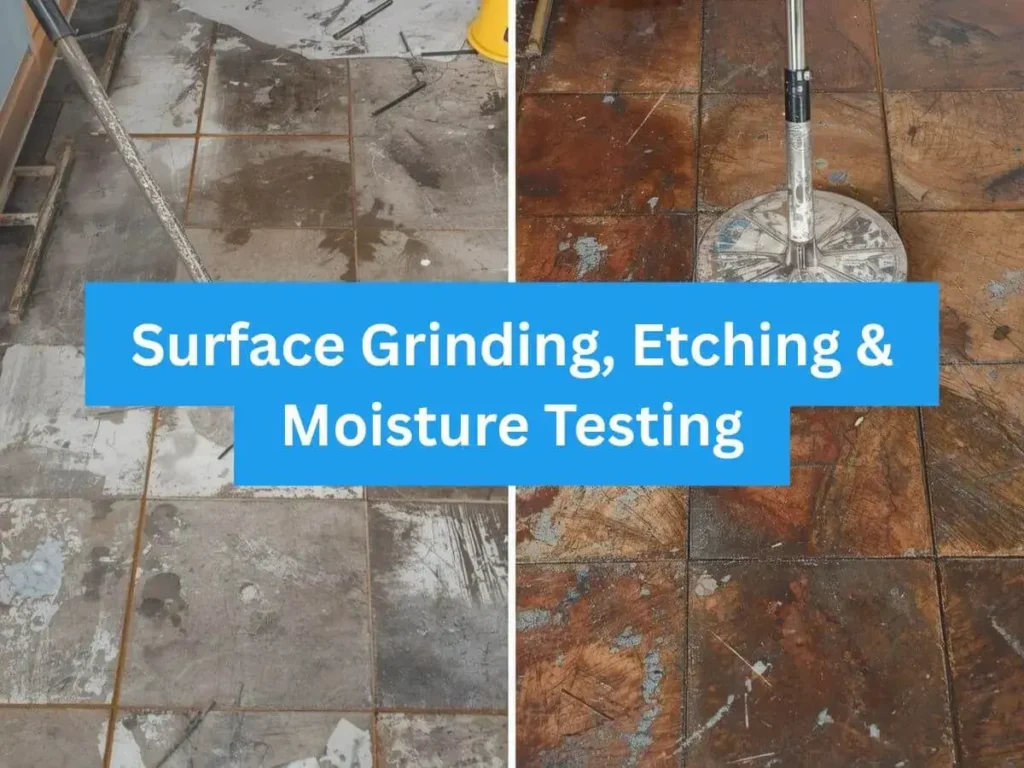
This is where the magic (or trouble) often begins.Proper preparation is what separates a flawless floor that lasts 10+ years from one that bubbles and peels within months.
Grinding the Concrete Surface
Best bet for a solid epoxy bond: mechanical grinding (diamond grinder, shot blasting, scarifying). Grinding removes any sealers, old paint, laitance (weak top layer), and gives concrete a nice “tooth” for epoxy to grab.
If your concrete’s old, sealed, or previously coated — grinding is almost mandatory. Otherwise, epoxy might just sit on top and peel off later.
Acid Etching or Alternative Methods (if grinding isn’t possible)
If grinding gear’s nowhere to be found, you can use acid etching (like diluted muriatic acid or commercial concrete-etch solution). But this only works well on unsealed, clean concrete. Acid alone doesn’t remove grease or sealers — so you must degrease first.
How to do it safely: always wear safety gear (gloves, goggles, mask), and add acid to water (never water to acid). Use a stiff broom to scrub the solution into the floor, let it react (bubbling helps), then rinse thoroughly and neutralize. Rinse multiple times — any leftover acid salts or residue can mess up epoxy adhesion.
Even after etching, experts often recommend re-checking surface by doing a water absorption or porosity test. If water beads or sits, concrete might still be sealed or contaminated — then etch again or grind.
Testing for Moisture
Moisture is one of epoxy’s worst enemies. Excess moisture under the slab can cause bubbles, delamination, peeling. Perform a quick plastic-sheet moisture test: securely tape a piece of plastic to the concrete floor, sealing all edges, and leave it in place for 24 hours. If you see condensation or water under the sheet — floor’s too damp. Wait more, dehumidify, or address vapor issues.
Better option (for pros): moisture-vapor emission test or in-slab humidity probe test per standards (like ASTM tests) — but if you’re DIY, plastic sheet test is a good start.
You want surface and slab both dry. Some coatings require slabs to emit no more than ~3 lbs moisture / 1000 sq ft / 24 hours.
Ensuring a Smooth, Even Surface
Once grinding/etching is done and floor is dry — take time to check surface. Walk over it, feel for rough spots, high or low areas, edges, corners. Use a broom or vacuum (ideally wet/dry vac) to clean up dust and fine particles. Any dust left = poor epoxy adhesion.
Concrete should feel like rough sandpaper to the touch (not super slick, not glassy). That “roughness” — often described as CSP 2–3 profile — gives epoxy something to latch onto.
What to Do After Surface Preparation?
Cleaning After Grinding or Etching
Dust from grinding or residue from etching must be removed. Vacuum thoroughly (wet/dry vac ideal), sweep, mop or rinse floor. Make sure you get all dust, fine grit, leftover chemical or particles. Floor should be bone-dry and spotless before next steps.
Priming the Floor
If your concrete is porous or you detect slight moisture, using a primer is smart. Primer creates a strong bond, so the epoxy sticks better and more evenly. It also helps seal micro-pores so epoxy doesn’t bubble or lift.
Ensure the primer you use is fully compatible with your epoxy system. Follow manufacturer’s instructions — mixing ratio, drying time, temperature, etc.
Planning Your Epoxy Application
Get everything ready before you start. That means mixing epoxy correctly (resin + hardener), having rollers, trays, brushes on hand, masking edges/walls/drains, covering or protecting anything you don’t want epoxy on (walls, woodwork, doors, windows).
If floor is large — plan in sections. Epoxy dries fast, so you don’t wanna run out of time mid-roll and end up with uneven finish. Also check weather/temperature: extreme heat, cold or humidity in Austin can affect cure. Many epoxy systems have a recommended surface + air temp range.
Safety and Ventilation Tips
Concrete grinding = dust. Acid etching = fumes. Epoxy resin = strong smell and sometimes chemical irritants. So always: open windows, run fans, ventilate the space well. Wear gloves, mask/respirator, goggles. If you can — a respirator is big win for safety and comfort.
Also protect yourself when handling patches, primers, solvents — concrete dust + epoxy chemicals = a rough combo if you ain’t careful.
Why Doing It Right Matters (Don’t Skip Steps)
- If floor is dirty, oily, or greasy, epoxy can’t grip — coating can bubble, peel, or delaminate.
- If concrete is too smooth or has been sealed/painted without removal — epoxy sits on top, doesn’t bond. Grinding or shot-blasting helps remove sealers/old coatings.
- Moisture under the slab or trapped during application = risk for bubbles, blisters, peeling. Moisture test not optional — it’s essential.
- Uneven floor, unpatched cracks/holes, rough edges — all these show over time under weight or traffic. The worst time to fix them is after epoxy sets. Better fix them now.
In short: prep is probably the most important step in a good epoxy job. Do it lazy — and you’ll get a lazy floor. Do it right — and you get strong, smooth, lasting epoxy that might outlive your ride 😄.
Conclusion
If you follow this guide — clean, degrease, repair, grind or etch, test for moisture, prime, prep, and plan — you’ll give your epoxy floor a fighting chance. It’ll look good, bond strong, and last years.
But if this sounds like a lot (’cause it is), and you want to skip the sweat — we get it. Doing all these steps takes time, muscle, and know-how. That’s where we come in.
Can’t Get It Right? Hire Austin’s Trusted Epoxy Flooring Experts
Look, we get it. Maybe you don’t have time for all this prep work. Maybe your floor’s more damaged than you thought.If you’d prefer an expert to ensure flawless results, we completely understand.
Why Professional Installation Matters
With pros, you don’t just get a floor — you get experience. We know how concrete behaves under Texas weather. We know how to fix hidden moisture issues. We’ve got grinders, vacuums, primers — high-grade gear most DIY-ers don’t. With our expert process, you’ll never worry about peeling epoxy, unsightly bubbles, or wasted hours fixing mistakes.
Benefits of Hiring Local Epoxy Specialists
- We respond to Austin climate — humidity, temperature swings, what concrete here needs.
- We finish fast. No weekends wasted dragging grinders or mixing epoxy.
- We guarantee results — smooth, solid, long-lasting floors that stand up to cars, tools, daily wear.
How to Book Your Epoxy Flooring Service Today
Give us a call at +1 512 234 5939 or visit epoxyflooringaustintx.com. We’ll come out, check your floor, prep it right, and lay epoxy — with no headaches for you.
Ready to Transform Your Floors? Contact Austin’s Trusted Epoxy Coating Experts Today
Stop settling for a worn-out floor. Contact Epoxy Flooring Austin TX now for a free quote and get a stunning epoxy finish that lasts.
Hit us up right now: 📞 +1 512 234 5939 🌐 https://epoxyflooringaustintx.com/
We’re ready to make your floor beautiful and functional. Reach out today – let’s talk about creating the perfect epoxy floor for your Austin home or business!