Epoxy Flooring vs Polished Concrete: Which Is Best for Austin Homes?
If you live in Austin and are picking new floors for your house, you’ve probably heard about epoxy flooring and polished concrete. Both are strong, modern-looking, and built for real life. But they are not the same. Some folks think epoxy is always better. Some say polished concrete wins every time.
Here’s the truth without the fluff:
For most Austin homes:
- Epoxy flooring is ideal for garages, workshops, and high-traffic areas because it provides protection and a sharp, professional look. It can last years if done right.
- Polished concrete is ideal for living spaces and open areas, offering a sleek, natural look that lasts for years with minimal maintenance.
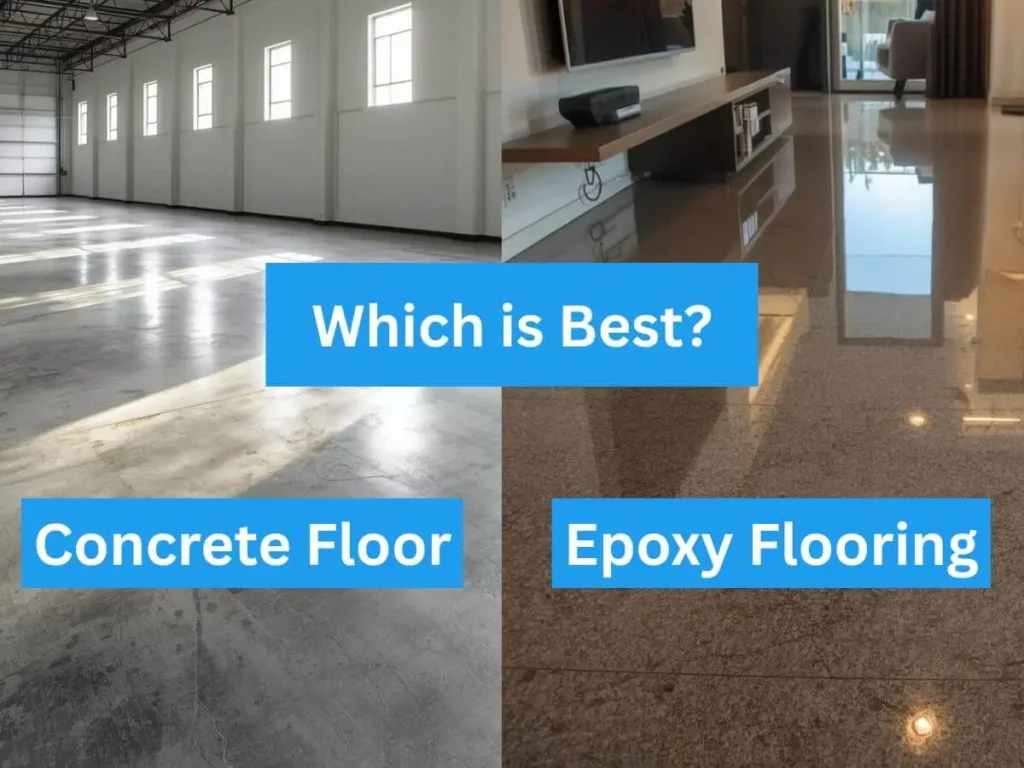
Both are tough. Both are easy to clean. Both can handle Texas heat. The main difference is in how each one deals with wear, cost, style, and care as time goes on. This guide breaks all that down simply and helps you choose for your Austin home.
What Is Epoxy Flooring?
Epoxy flooring is like a hard shell poured over concrete. It’s made of a resin and hardener that mix and chemically stick to the floor. Once it cures, it becomes a solid, shiny surface. The installer first prepares the concrete, then spreads layers of epoxy that bond deep into the slab. The result is smooth, bright, and almost seamless.
Where Epoxy Flooring Works Best
People in Austin choose epoxy for floors that see heavy use, spills, or vehicles. Think:
- Garages
- Workshops
- Laundry rooms
- Basements
- Pool houses
Epoxy shines where you want strong protection and easy cleanup.
What Is Polished Concrete?
Polished concrete starts with your existing slab. A grinder with diamond pads smooths the surface, and then finer pads shine it up until it looks almost like glass. It is not a coating. It is the concrete itself transformed.
You can add dyes or stains, but mostly the charm comes from the natural concrete look.
Where Polished Concrete Works Best
Polished concrete is perfect for:
- Living rooms
- Kitchens
- Open floor plans
- Dining areas
- Outdoor patios (with proper sealing)
It works well where you want a modern floor that just stays looking good with simple cleaning.
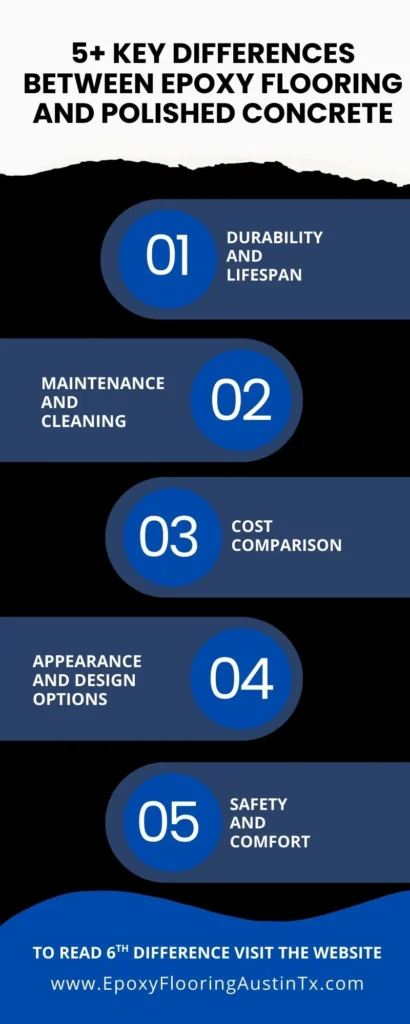
5+ Key Differences Between Epoxy Flooring and Polished Concrete
Durability and Lifespan
Epoxy
- Strong and tough. Great for heavy loads and spills.
- Improper installation can lead to chipping or peeling
- Typically needs recoating every 5 to 10 years, depending on wear.
Polished Concrete
- Built right into your slab, so no coating to peel.
- It can last decades with simple maintenance.
- Built to withstand scratches and constant foot traffic
Austin Climate Note:
Austin gets hot, humid summers and dry winters. Standard epoxy can soften or bubble in extreme heat without quality UV topcoats. Higher‑end heat-stable coatings perform better in Texas.
Maintenance and Cleaning
Epoxy Flooring
- Easy to clean with a mop or mild cleaner.
- Avoid harsh scouring tools that can scratch the top layer.
- May need recoat after heavy wear.
Polished Concrete
- Sweep and damp mop only.
- No waxing or coatings to replace.
- Just periodic buffing gives long life.
Cost Comparison in Austin
Installation Cost Differences
Epoxy and polished concrete costs vary a lot depending on slab prep, size, and design. Simple, polished finishing can be cheaper in the long run because it’s long‑lasting and needs little care in the future.
Epoxy often costs more upfront because of materials, prep, and installation time. But customization can add value for spaces like showrooms or stylized garages.
Long-Term Cost Considerations
- Epoxy may need recoating in the years ahead.
- Polished concrete rarely needs a major redo.
- Lifetime cost can favor polished concrete if you care more about minimal maintenance.
Appearance and Design Options
Epoxy
- Tons of colors, patterns, and flake effects.
- You can make your floor match your garage or style.
Polished Concrete
- Natural stone color, sleek and modern.
- You can stain or add scoring lines for style.
- Less flashy than epoxy, but timeless.
Safety and Comfort
Epoxy is smooth by nature and requires additives to prevent slipping when wet.
Polished concrete has a natural texture that often grips better, even when damp.
Both can add special grip additives if safety is a priority.
Concrete floors, in general, feel harder and cooler than wood or carpet. Area rugs help living spaces feel comfy.
Moisture and Heat Resistance
How Each Flooring Handles Austin Weather?
Epoxy
- It can trap moisture under the surface if the slab wasn’t dry before installation, which can cause bubbles or peeling.
- Basic epoxy can soften or yellow in Austin’s intense summer heat without UV‑stable formulas.
Polished Concrete
- Polished and sealed concrete resists moisture well.
- It handles heat and humidity without weakening.
- Concrete’s thermal mass even helps cool floors in summer.
Pros and Cons
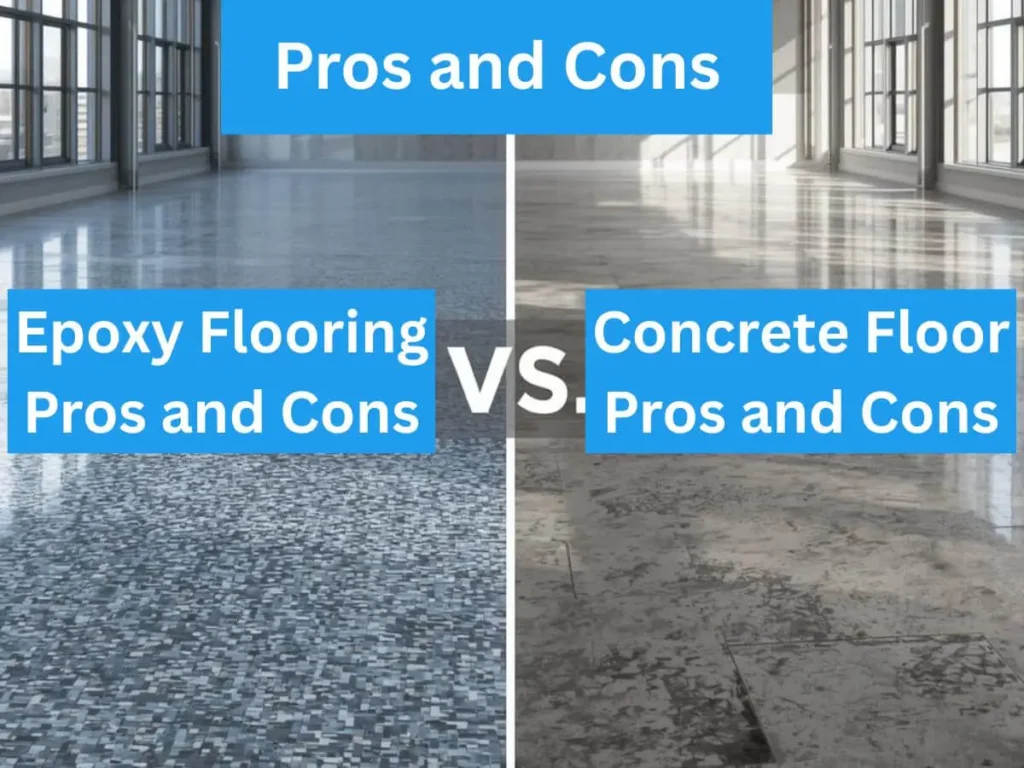
Epoxy Flooring Pros and Cons
Pros
Cons
- It can be slippery when wet.
- Sensitive to heat and moisture issues.
- Needs professional install.
Polished Concrete Pros and Cons
Pros
- Ultra durable and long‑lasting.
- Minimal maintenance.
- Natural look that never goes out.
Cons
- Fewer color and design options.
- Cold and hard underfoot.
- Needs proper sealing.
Which Flooring Is Right for Your Austin Home?
Best Choice for Garages
If you want a garage floor that pops and stands up to spills, wheels, and heavy use, epoxy flooring is a strong choice. Its tough surface beats bare concrete, and colors make it easy to match your garage vibe.
Best Choice for Living Areas
For living rooms, kitchens, and open spaces, polished concrete makes more sense. It looks natural, stays low-maintenance, and lasts decades with simple care.
Final Verdict
There is no one answer for every Austin home. If your top priorities are style and protective toughness in heavy-use spaces, epoxy is worth it. For natural beauty, longevity, and easy care throughout your home, polished concrete is the better fit.
Both floors beat cheap tile or worn wood when it comes to durability and long‑term comfort in Austin’s heat and humidity.